Wing Chun Dao 詠春道
The Dao
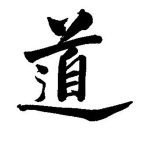
The word “Dao” 道 (also “Tao”) comes from Daoism and can be translated as “way,” “path,” or “method.”
In philosophy it refers to the natural order of things, what sustains and guides experience without needing to be named. In Japanese it is pronounced dō and appears in terms such as budō, karate-dō, jūdō, and aikidō.
The character 道 combines the phonetic 首 (shǒu, “head”) with the semantic radical 辶 (older form 辵, chuò, “to walk; road”). The combination evokes “the head guiding the step,” hence its sense of way, path, or method.
Our choice of “Dao” feels natural for the school and its ethos. Our aim is the path itself, not a fixed result. Wing Chun is a lifelong way that each person walks in their own manner; understanding arises through practice. There are no absolute answers or single methods, only what we learn from consistent training and the people we meet along the way.
Originally, gongfu 功夫 (often rendered “kung fu”) does not name a style; it means skill cultivated over time through effort, dedication, and continuity. Written as 功 (gōng, effort/merit) and 夫 (fū, person), it points to work done steadily until it becomes ability.
By practicing, we keep moving, face difficulties, and overcome them; in doing so, we return to a more natural rhythm of life.

Tradition and Science — The Wing Chun Dao Method
Foundations of the Wing Chun Dao School

The foundations of Wing Chun Dao rest on a systematic and academic study of the art’s history and founding principles, especially the Kuen Kuit. Our teaching and methodology arise from years of practice and transmission, and were refined through my Expert University training at the INEF (Polytechnic University of Madrid), which brings teaching frameworks, planning and assessment, and a modern pedagogy placed at the service of the practitioner, fully translated into the teaching of Wing Chun.
View the INEF-UPM Expert Program.
We adopt a scientific and historical position in the study of Wing Chun and its origins, prioritising sources and traceability according to an academic method. We recommend reading our article to understand the complexity historians face when deciphering the development of Wing Chun, shaped by its historical context and by transmission through secret societies.
Read the article.
Roots and Study in Context
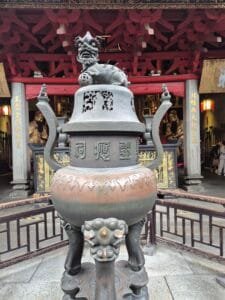
After years of training and study in Europe—together with sustained reading, source comparison, personal research and review of the Kuen Kuit—with the intention of placing practice in its real historical and technical context, we decided to visit the places of origin to understand the art from another cultural perspective, to observe its transmission beyond Hong Kong and, in particular, in mainland China (Guangdong) through the study of the Yuen Kay Shan system. In this lineage we found a more preserved and coherent view of the art which, without imposing itself over any other, allows us to revisit our style and keep deepening into a fuller and more faithful understanding of Wing Chun.
Program and Practitioner Development
The meeting point between a modern teaching methodology and the essence of traditional transmission gave rise to our structured training program, composed of 12 grades with specific objectives and contents. This system allows the student to quickly acquire the fundamentals of Wing Chun and to develop their skills based on their individual characteristics, respecting their pace and personal process.
Training fosters the biomechanical development specific to Wing Chun through a progression that gradually transforms structure, optimises coordination, strengthens axis control and improves movement efficiency. As in every traditional martial art, this process generates a natural evolution in the practitioner—both physical and technical—which can only be achieved by respecting the authentic transmission of each style.
Our curriculum is rooted in the Wing Chun of Ip Man, the central core of instruction, and is complemented by specialisation modules that broaden and deepen understanding of the art, such as Weng Chun and weapons work. In this way, the student consolidates a solid base while discovering new perspectives that enrich practice within a coherent framework.
We provide structured didactic content —videos, written materials and study guides— for each grade and specialisation, designed to support continuous learning and reinforce the student’s progression beyond regular classes.
We integrate the responses and dynamics of contemporary combat sports to prepare the student for current forms of attack and movement, without losing the essence or the depth of traditional Wing Chun.
Our school is grounded in a modern and academic vision, open to collaboration and exchange with other disciplines and traditional arts.
Background
Details of my path, lineages and study visits can be found here: