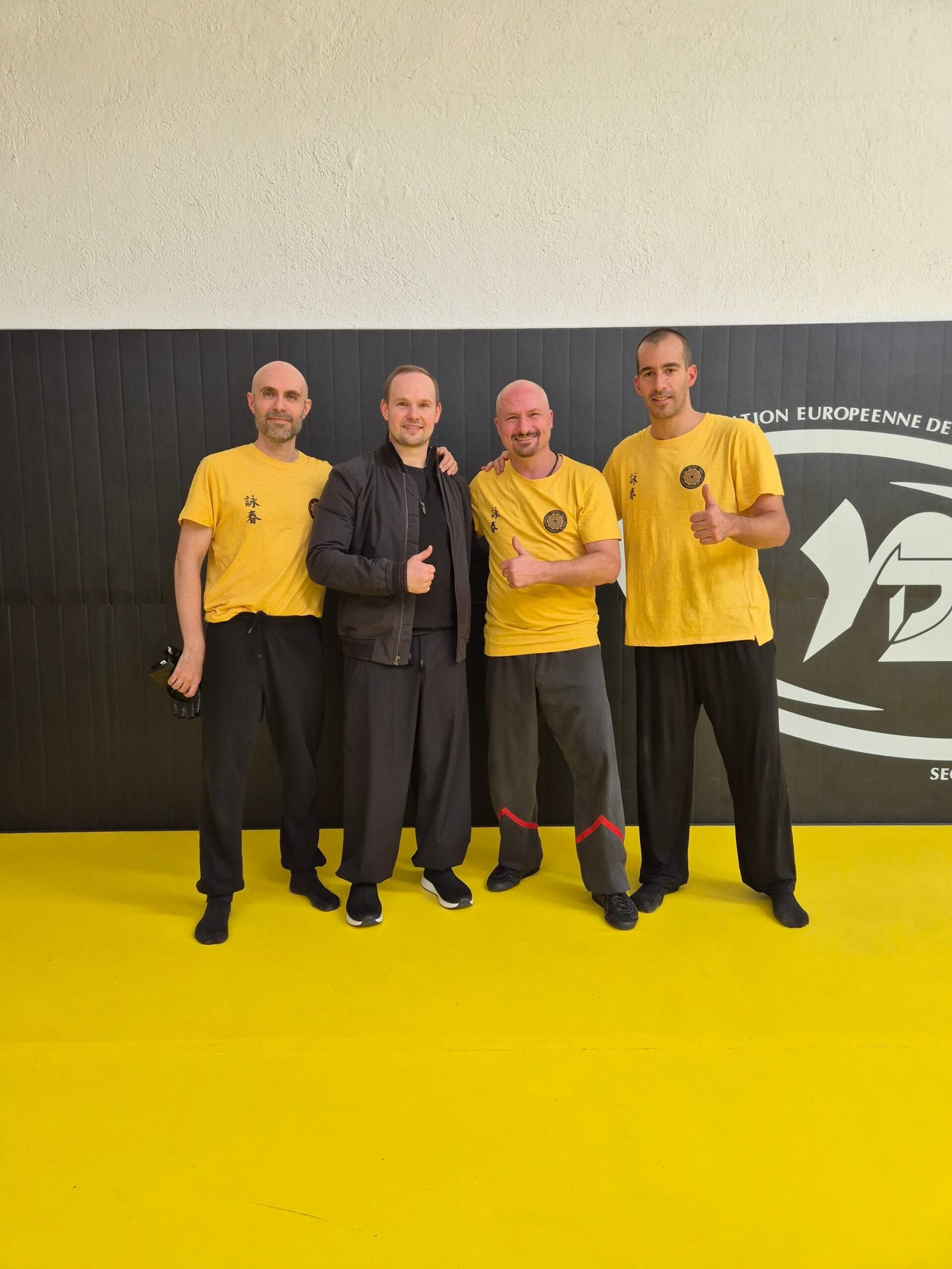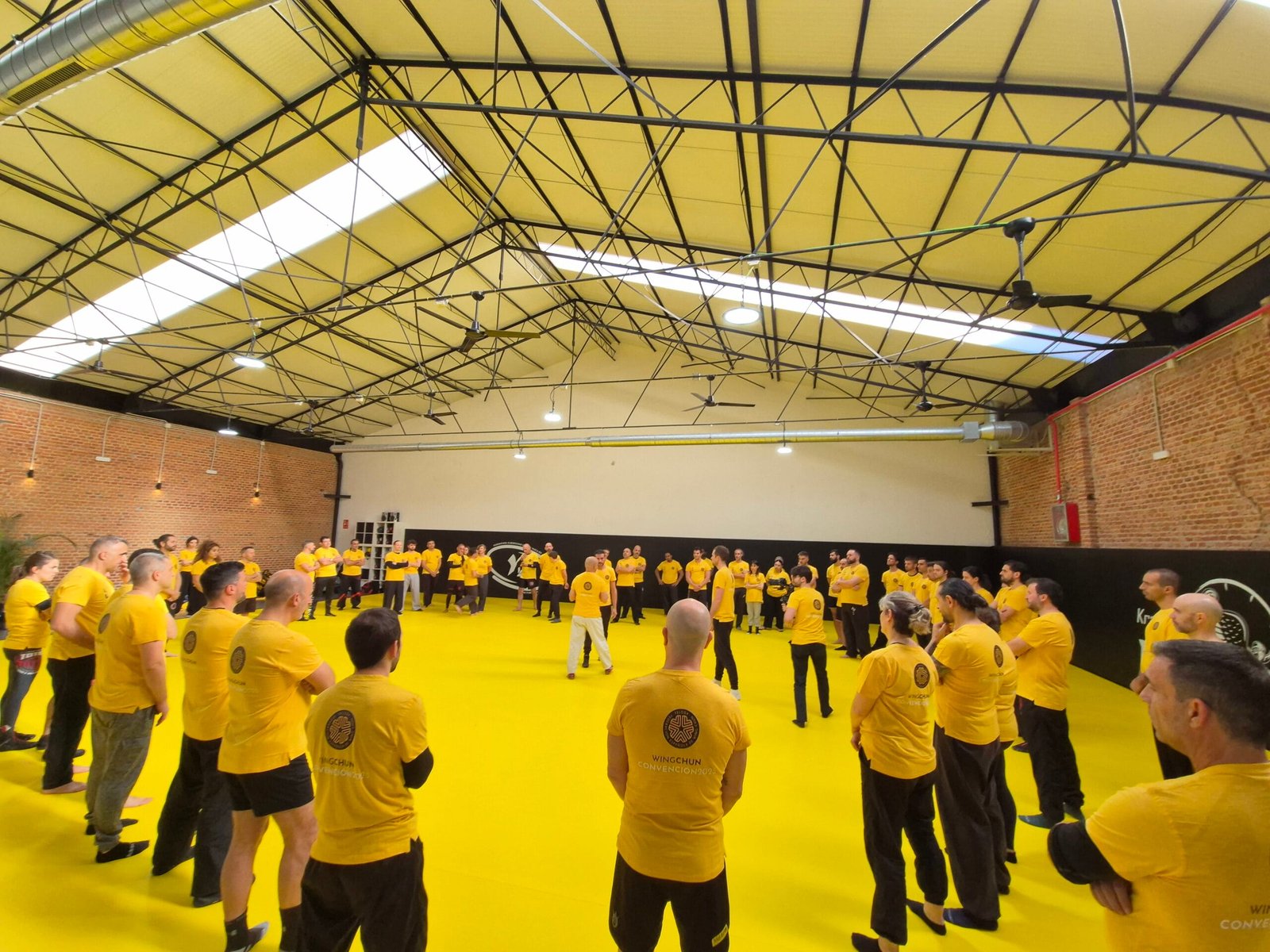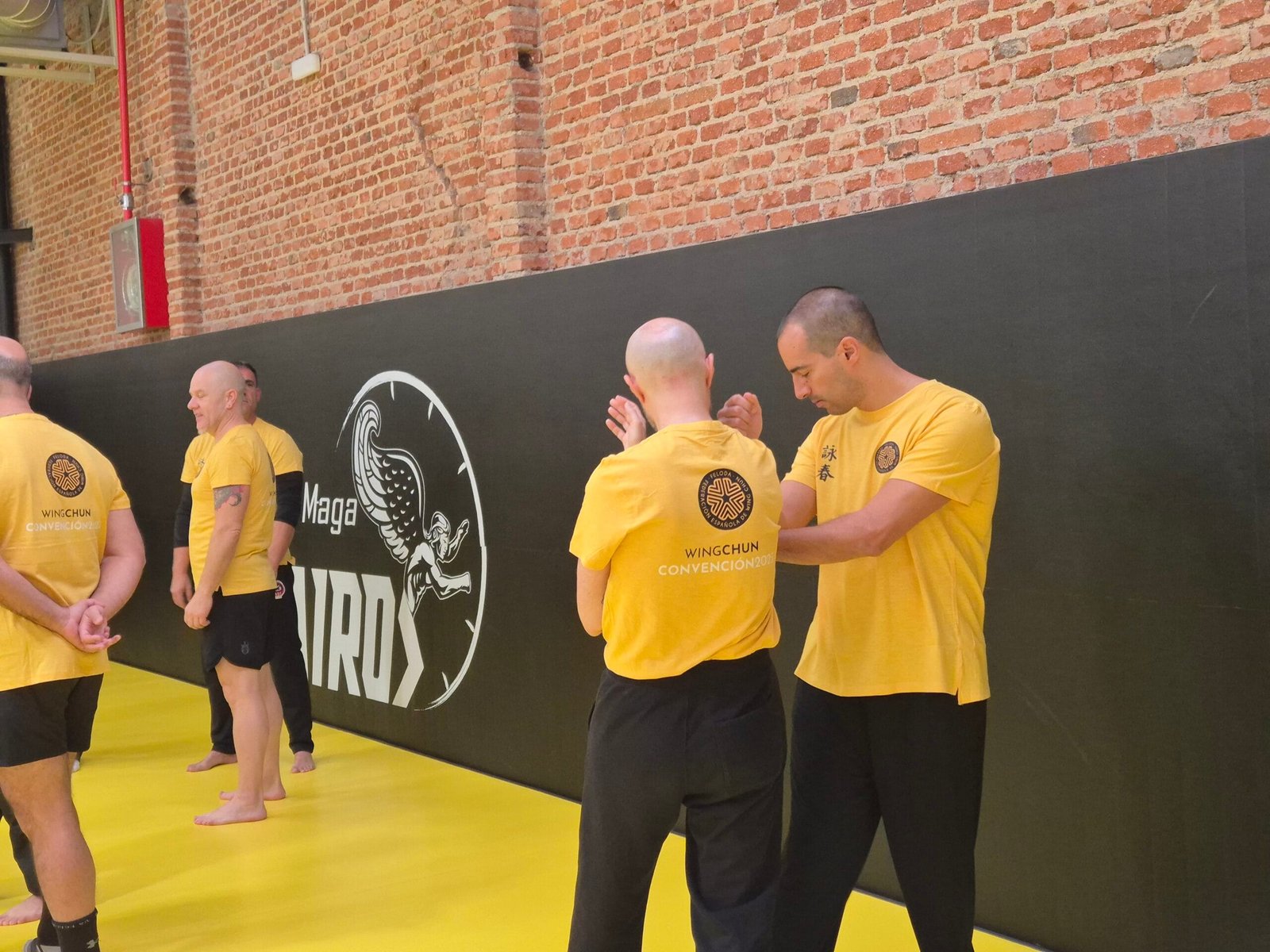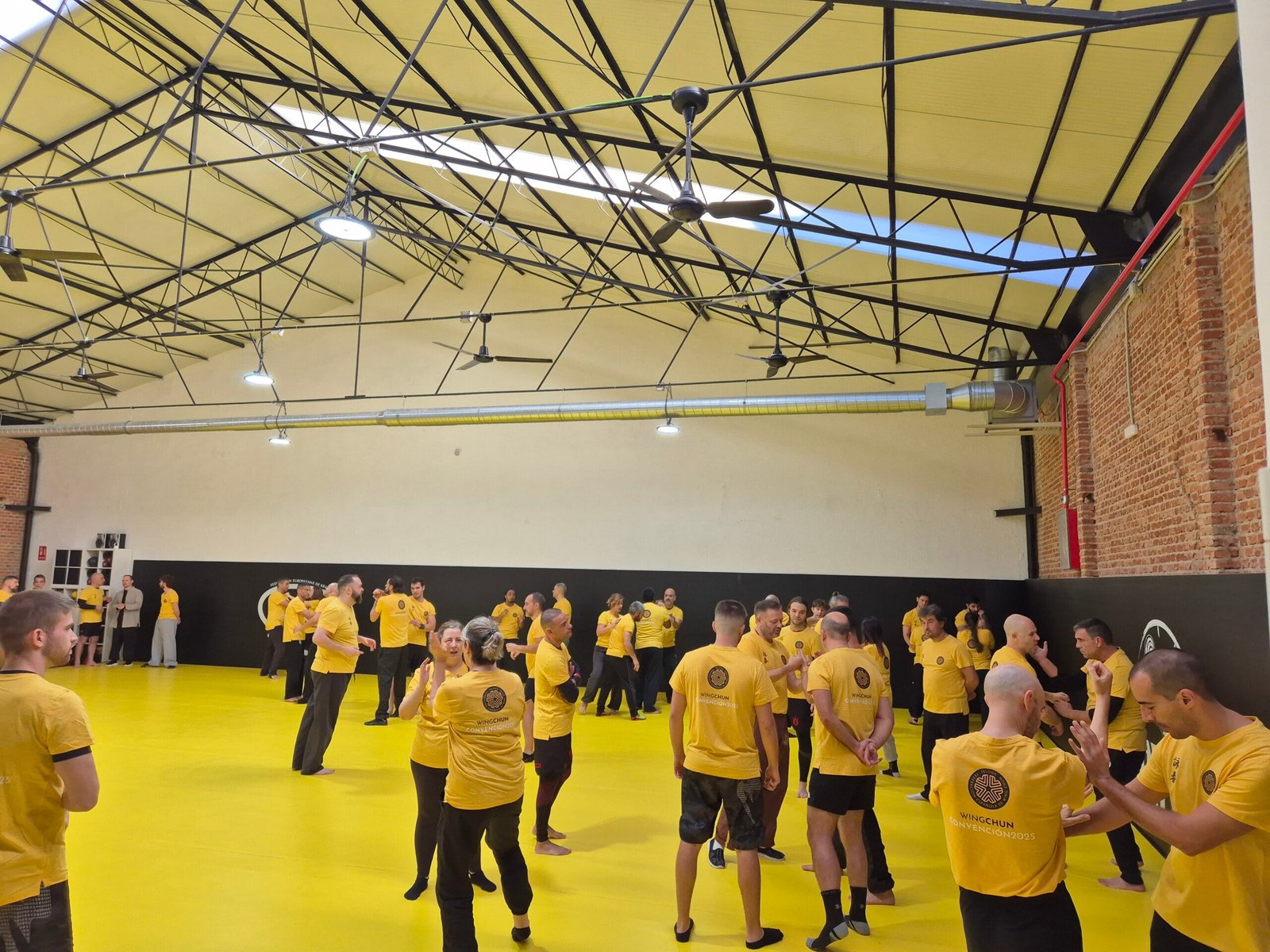
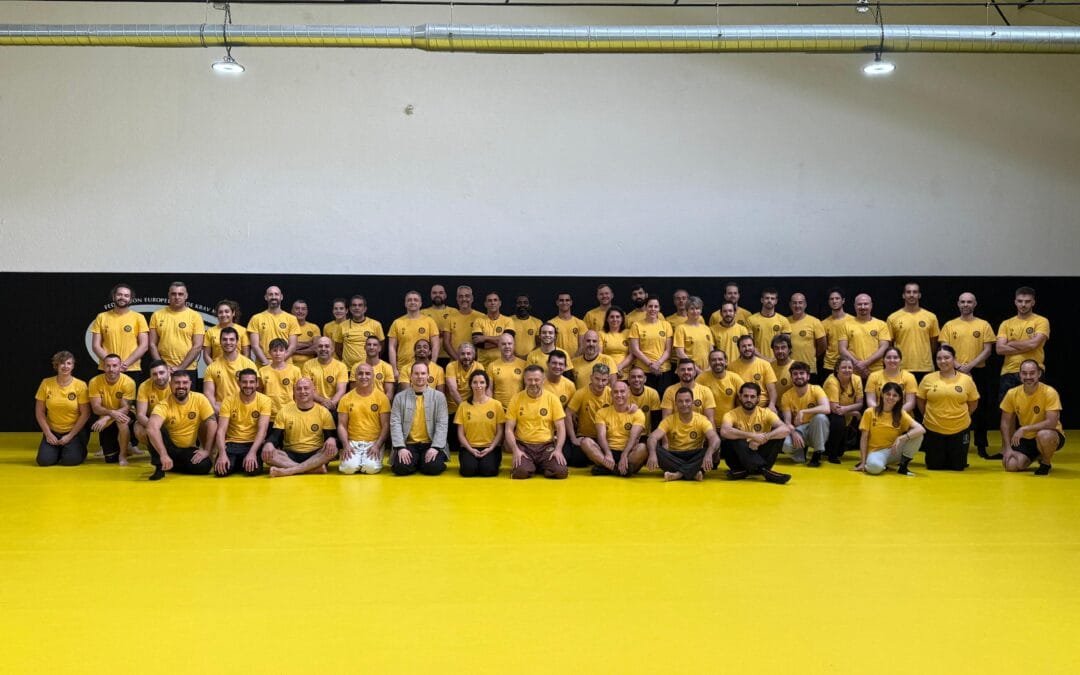
This year, once again, we had the opportunity to take part in the Wing Chun Convention España (2025 edition). As always, it was a pleasure to reconnect with all our fellow practitioners under one shared spirit: training, discovering, and also rethinking our style. Thanks to strong>@wingchun_spain for the organization and the great atmosphere.
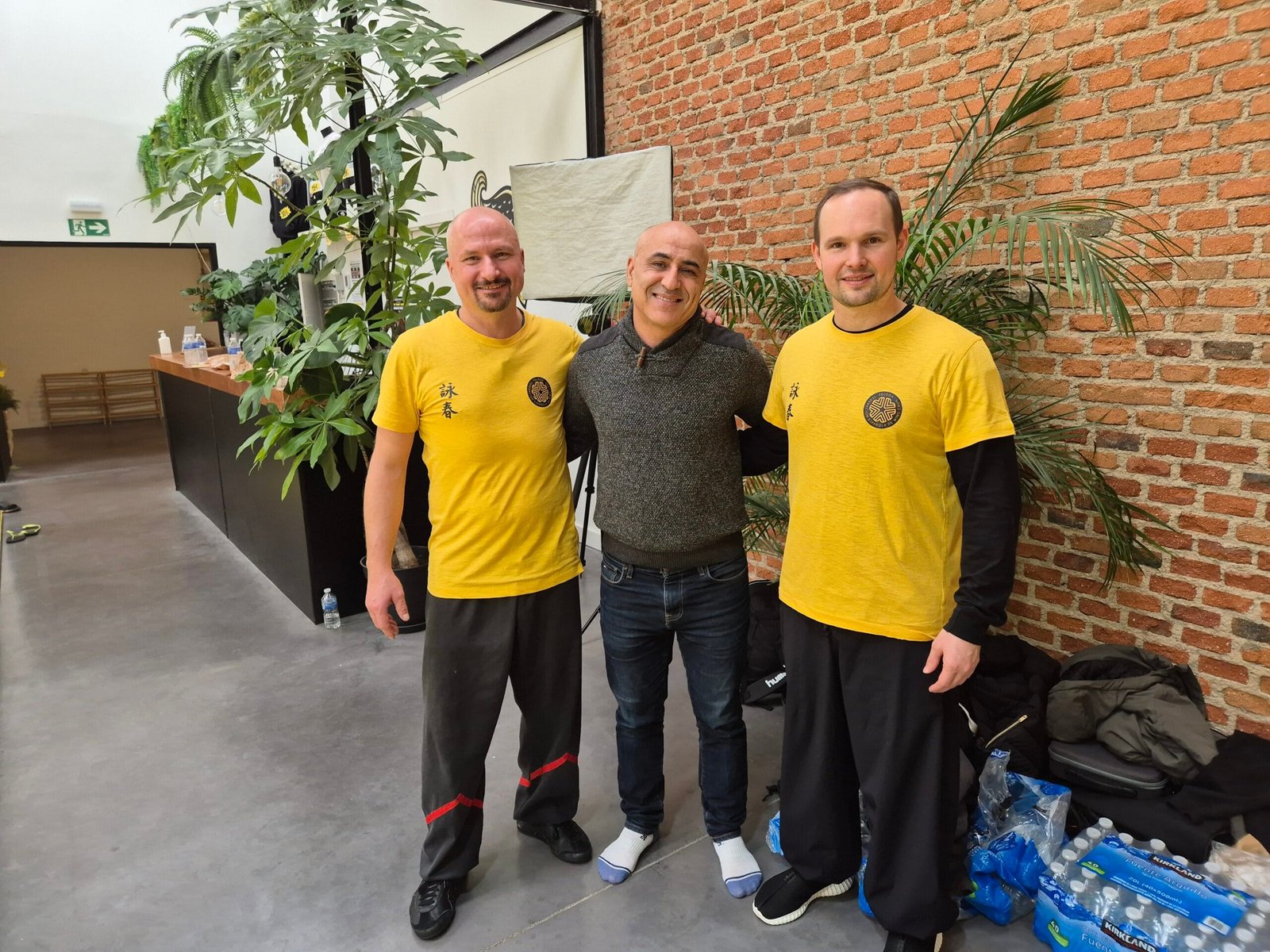
It was also a pleasure to meet again and share this event with our friend Bruno Tombolato, director of Shaolin Cultural Center Spain. At his school, Bruno teaches traditional Shaolin Kung Fu and Shaolin culture, and is presented as a disciple of the 32nd generation of the Shaolin Temple.
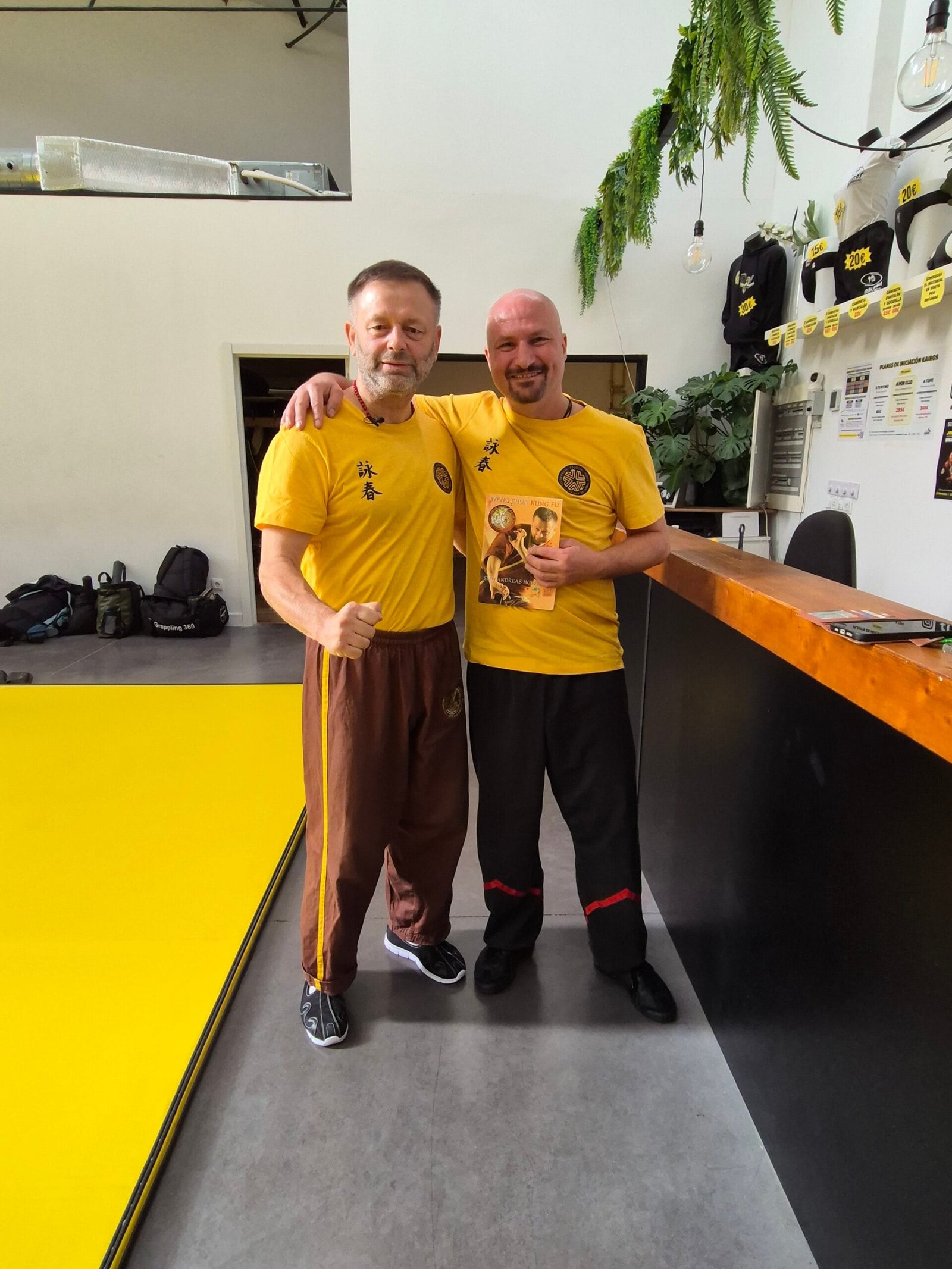
One of the highlights of this edition was the presence of Andreas Hoffmann, a key figure in the development of Weng Chun in Europe. Beyond the training itself, it was a real pleasure to speak with him about the origins of Weng Chun, exchange perspectives, and gain a deeper understanding of how a living tradition is built and transmitted.
Andreas Hoffmann is widely recognized for his role in the international dissemination of Weng Chun outside China. He is associated with the transmission of the lineage of Grandmaster Wai Yan and with the historical context of Dai Duk Lan (Dai Tak Lan), a place linked to the exchange and practice of Weng Chun masters in Hong Kong.
In the 1990s, when many traditional styles were losing visibility in China and Hong Kong, Hoffmann is cited as the founder of the International Weng Chun Kung Fu Association, contributing to the expansion of Weng Chun internationally. Today, he leads an international network of Weng Chun instructors present in several countries.
To learn more about Weng Chun, visit the official website.
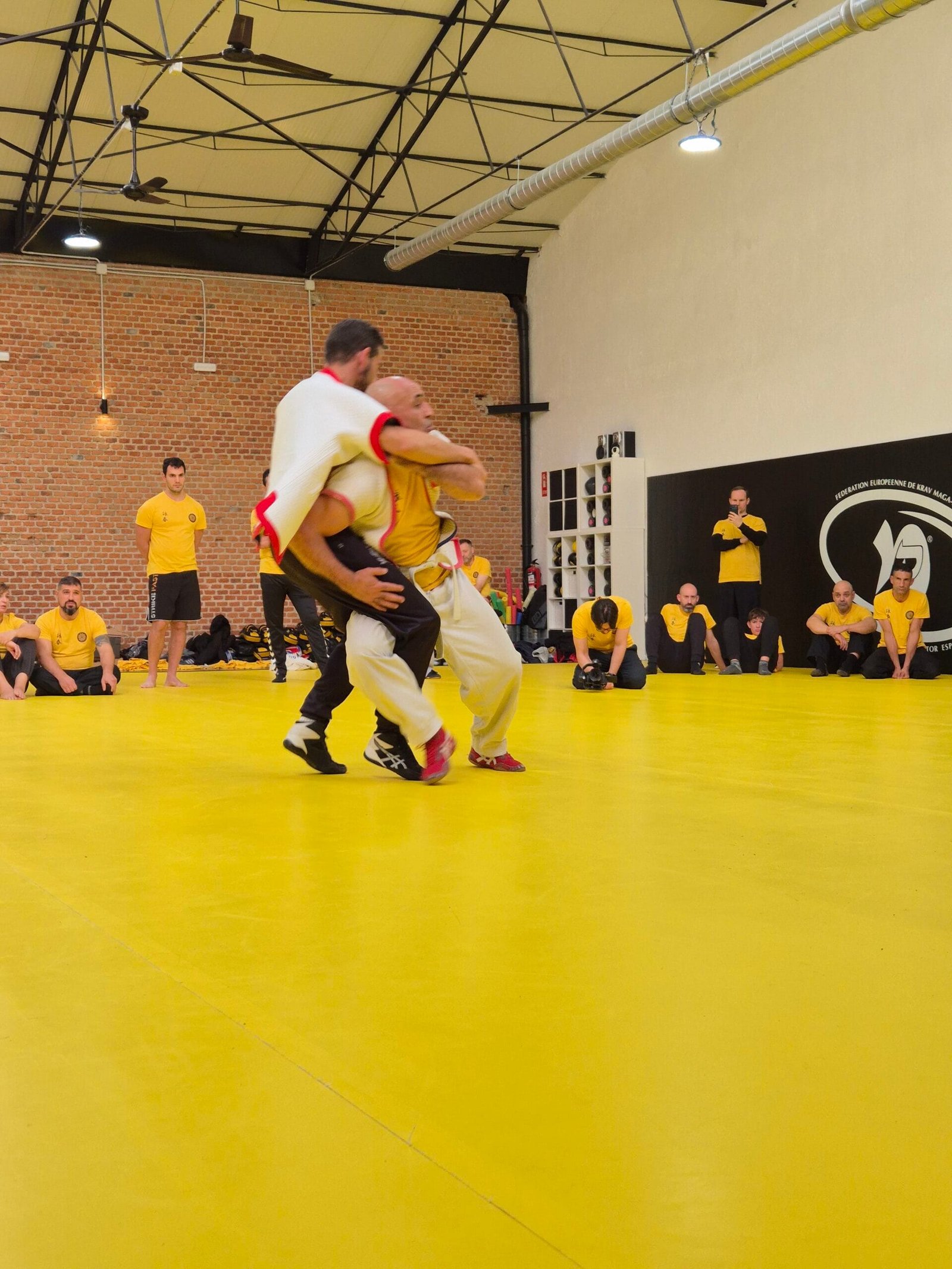
We also had the opportunity to discover Chinese wrestling (Shuai Jiao / Shou Bo) with Amazigh (Augustin) Zenia, a world champion and 6th Duan.
Traditional Chinese wrestling is now most commonly known as Shuāi Jiāo (摔跤), a term that literally refers to “throwing / bringing down.” In historical accounts, it is often linked to older forms of wrestling such as Jiǎo Dǐ (角抵, “horn butting”) and Jiǎo Lì (角力, “horn strength / wrestling”), associated with military training and public competitions in China.
As for the name itself, 摔 (shuāi) means “to throw to the ground,” and 跤 (jiāo) is understood as “wrestling / tripping with the legs.” Some texts also mention the older character 角 (“horns”), which reflects the symbolic origin of the “horn butting” idea in jiǎo dǐ.
In modern practice, Shuai Jiao is primarily a standing grappling art: grip control, off-balancing, sweeps, and throws. Competition rules typically score when the opponent touches the ground with the hand(s), knee(s), elbow(s), or hip, and special value is placed on throwing while remaining standing. That’s why, after a fall, it is common to reset the action on the feet rather than develop prolonged ground fighting.