What Is Qi Gong (Chi Kung)?
Daoyin, also known as Qigong, is an ancient form of exercise that originated in China more than 5,000 years ago. This practice combines physical movements, mental concentration, and breathing.
The Chinese exercise Dao Yin (导引) has been widely applied for medical treatment and health preservation since ancient times and is also recognized as an effective traditional orthopedic therapy in both ancient and modern Traditional Chinese Medicine. “Dao” (导) means to guide the Qi—the body’s internal vital energy—to create internal balance, while “Yin” (引) means to stretch the body to develop strength and flexibility.
What Are the Benefits of Qigong?
Beyond being an excellent training tool for martial artists, Qigong offers remarkable health benefits such as:
- Increasing flexibility
- Strengthening and relaxing the muscles
- Improving posture and balance
- Boosting the immune system
- Detoxifying the body
- Reducing stress and anxiety
- Enhancing energy levels
- Balancing emotions
Daoyin
 In ancient times, there were more than thirty different names referring to Qigong, such as Tu Na, Xing Qi, Bu Qi (Qi infusion), Fu Qi (Qi absorption), Dao Yin, Lian Dan, Xiu Tao (self-cultivation according to Taoist doctrines), and Zuo Chan. In fact, Qigong includes many forms, and these various names represent different subtypes that can be classified as Massage Gong, Dao Yin Gong, and Health Preservation Gong, according to their specific effects on the body.
In the 1950s, thanks to the efforts of the renowned Qigong expert Liu Gui-Zhen, the term “Qigong” was officially recognized by the Chinese government.
History
As one of the oldest native methods of health preservation in China, Dao Yin dates back to ancient times (around 2146 BCE). According to the Spring and Autumn Annals · The Old Tunes of Lü, when the Tao Tang tribe ruled the world, stagnation of Yin energy led to disease and weakness among the people. To revitalize their bones and muscles, dances and physical movements were created to stimulate the flow of Qi and blood. This practice marked the origin of what later became known as Dao Yin.
The term “Dao Yin” first appeared in Zhuangzi, Chapter 15 “The Sign of Virtue Complete”: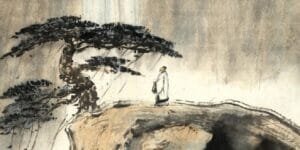
“Breathing in and out, exhaling the old and inhaling the new, moving the body like a bear or a bird to preserve vitality and spirit — this is what is praised as the way to nourish life and attain longevity.”
According to this philosophy, longevity could be achieved through physical movement inspired by animals and through the practice of Tu Na (breathing techniques). Unlike general physical exercise, Dao Yin emphasizes inner calm and rhythmic movement. As described in the text Xuan Jian Dao Yin (Volume 36 of Yun Ji Qi Qian), “Dao Yin should follow the principle of peace; the head rises slowly, and the body stretches rhythmically. When practicing Dao Yin, one should remain calm and move with moderate rhythm.”
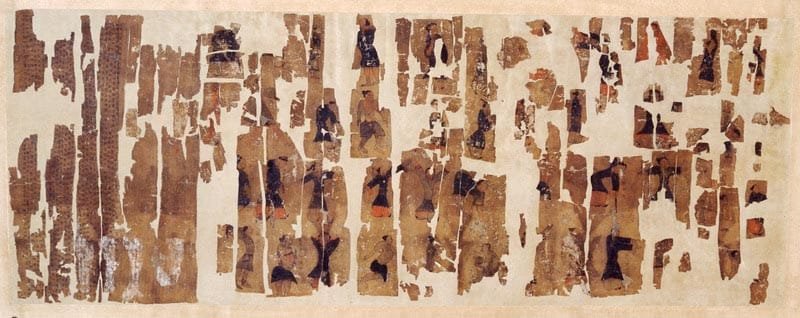
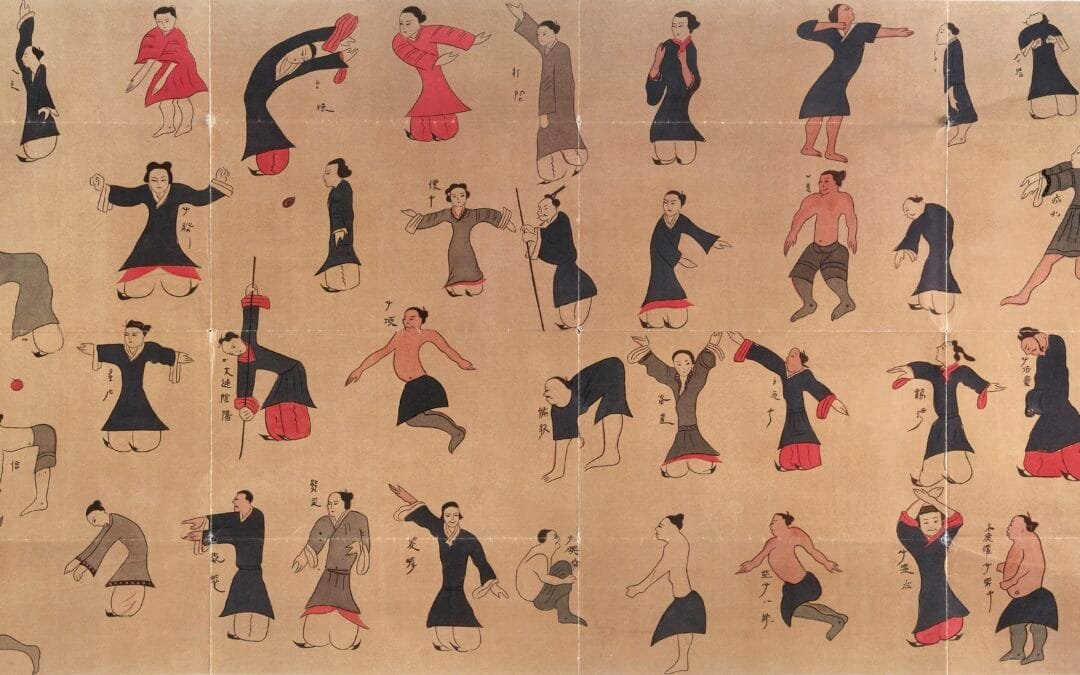
Daoyin Tu
In 1973, Chinese archaeologists discovered a silk banner in the tomb of the Marquise of Dai, one of the three tombs in the Mawangdui cemetery in Hunan, near Changsha.
This painting, dating back to 168 BCE (Han Dynasty, 206 BCE – 220 CE), measures 140 cm long and 50 cm wide. It is painted in full color and depicts 44 illustrations, each corresponding to a specific animal, organ, or disease. The paintings also include instructions on how to perform the exercises, as well as explanations of their benefits and effects.
The Mawangdui Daoyin Tu is considered a valuable source of information on the history and development of medicine, philosophy, and Chinese culture. It also offers insight into ancient Chinese views on health, disease, and prevention.
The Mawangdui Daoyin Tu has been extensively studied and reproduced by many scholars and practitioners, inspiring numerous modern versions and adaptations of the Daoyin Tu.
In Summary
The Dao Yin exercise has been practiced in the field of Traditional Chinese Medicine for thousands of years. According to historical records and ancient texts, Dao Yin represents a unique system of health preservation and disease treatment, deeply rooted in the rich cultural heritage of China.
Unlike general physical exercise, Dao Yin integrates the body with breathing, mental focus, and emotional regulation. It is not strenuous but requires rhythm control and balance of temperament, aiming to promote health, prevent illness, and support healing through active, mindful practice.
Source and further information:
🔗 Access the article on PubMed Central: Study on NCBI
To learn more about Daoyin, you can read our article on Daoyin Yangsheng Gong in our blog.
To discover more about our unique method combining Qigong and functional training, click here.