Wing Chun Dao 詠春道
The Meaning of Dao
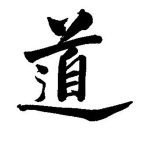 The word Dao 道, also written “Tao”, comes from Daoism and can be translated as way, path, or method.
In philosophy, it refers to the natural order of things: what sustains and guides experience without needing to be named. In Japanese, it is pronounced dō and appears in terms such as budō, karate-dō, jūdō, and aikidō.
The character 道 combines the element 首 (shǒu, “head”) with the radical 辶, the simplified form of 辵 (chuò, “to walk” or “road”). Its composition evokes the idea of a head guiding the step, hence its sense of way, path, or method.
Our choice of Dao feels natural for the school. It reflects the idea of a path, not a fixed destination. Wing Chun is something we keep exploring throughout life, each person in their own way. Understanding comes through practice, not through ready-made answers.
There is no single method that works for everyone. What matters is consistent training, honest practice, and what we learn from the people we meet along the way.
Originally, gongfu 功夫 — often written “kung fu” — did not refer to a specific martial art. It means skill developed over time through effort, dedication, and regular practice. It is written with 功, meaning effort or merit, and 夫, meaning person.
Through practice, we keep moving, face difficulties, and learn to overcome them. In that process, we come back to a more natural rhythm of life.

A Traditional Art, Taught Step by Step
 Wing Chun is a deep martial art, but it should not be confusing. At Wing Chun Dao, the practice is organised so that each student can progress step by step, with clear objectives and a structured path.
The school program is divided into 12 student grades, similar to a belt progression in other martial arts, and 4 technical grades, aimed at a more advanced understanding of the system, comparable to Dan levels in Japanese martial arts.
This structure allows students to build solid foundations before moving toward more advanced work. Each level includes technical practice, partner drills, body mechanics, coordination, sensitivity, applications and theoretical principles.
The aim is not to accumulate techniques, but to understand the logic of the system and develop real skill through regular practice.
We combine traditional transmission with a modern teaching method. Classes are designed to help students improve their posture, stability, timing, relaxation under pressure and ability to adapt to different situations.
Students also have access to structured learning materials, including videos, written notes and study guides, to support their progression beyond regular classes.
Lineage and Influences
 The current direction of our school is rooted in the Yuen Kay Shan / Mai Gei Wong lineage, which brings a clear, principle-based and progressive approach to Wing Chun.
At the same time, our program still integrates a strong Ip Man Wing Chun core, especially for the development of forms, basic techniques, Chi Sao, Lat Sao, footwork, distance management and practical applications.
This structure allows students to benefit from a clear and accessible progression while gradually discovering a deeper understanding of the art through the Mai Gei Wong approach.
Our study has also been enriched by other branches of Southern Chinese martial arts, including Foshan Wing Chun and Tang Yik Weng Chun. These influences help us refine body mechanics, timing, structure, distance and adaptability.
To learn more about my background, training, and the school’s instructors, you can visit the instructors page.